
It’s been 48 hours since OpenAI dropped GPT-5.3-Codex, landing just 27 minutes after Anthropic released Claude Opus 4.6. I’ve spent the last two days throwing my messiest legacy repos at both.
The verdict? We have officially moved past "Autocomplete on Steroids."
For the last three years, we've been stuck in a paradigm where models predict the next chunk of syntactic text. They were guessing tokens. GPT-5.3-Codex represents a hard pivot to state manipulation. It’s not just writing code; it’s operating the computer.
Here is the breakdown of what actually matters for your workflow.
No more waiting for code
The first thing you notice is the latency drop. 5.3-Codex runs about 25% faster than the 5.2 model. In an agentic loop where the AI is reading errors and re-prompting itself, that speed compound significantly.
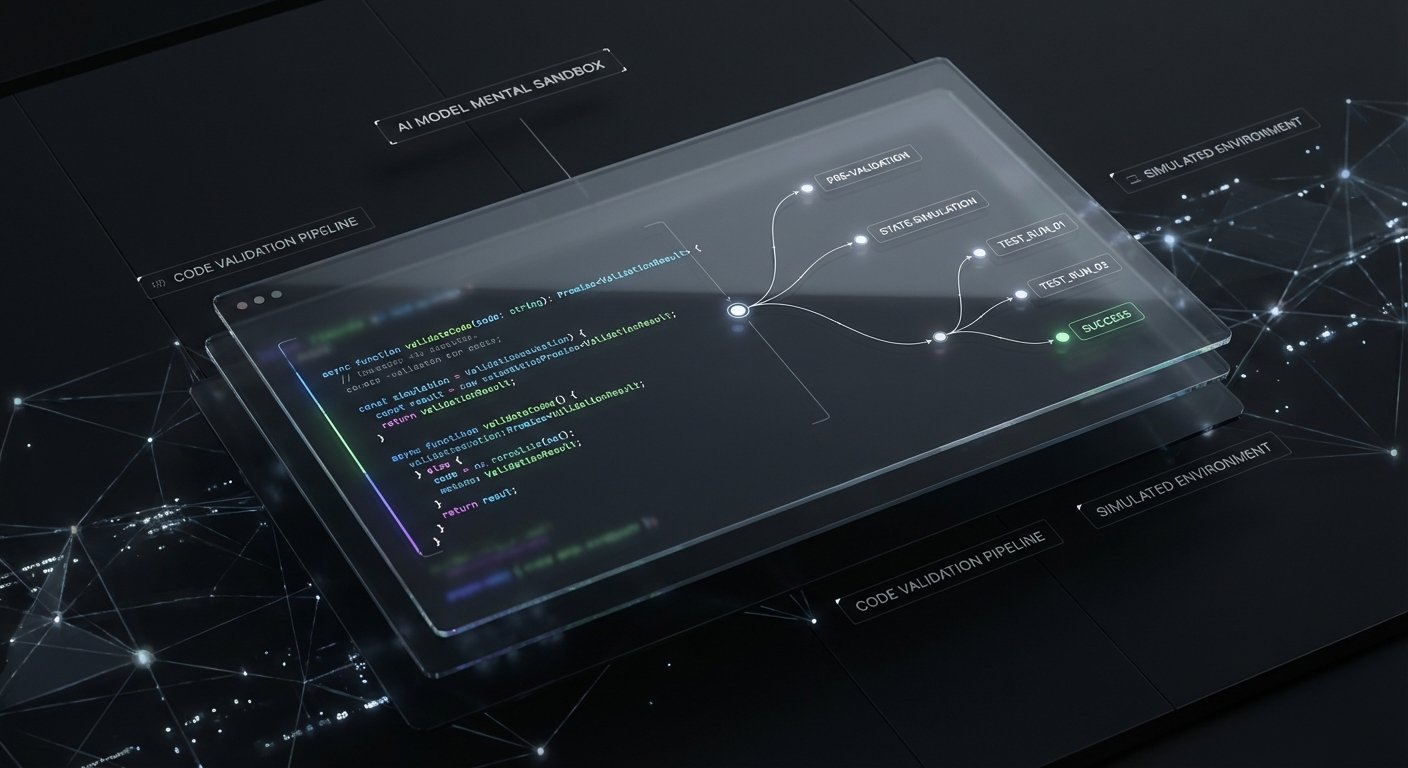
But the speed isn't just raw inference optimization; it’s architectural. OpenAI has shifted the model to use an internal "mental sandbox." Before it streams a single line of code to your IDE, it appears to be pre-validating the logic internally.
This solves the classic "import hallucination" problem. The model simulates the execution environment to catch runtime errors before generation.
Rumor has it this model was instrumental in debugging its own training runs. When an AI starts fixing its own deployment harness, we are entering weird territory. But as a user, it means fewer "Sorry, I made a mistake" loops and more running code on the first shot.
Mastering the terminal
This is where the "Agent" label actually earns its keep.
In the past, giving an LLM access to my terminal felt like handing a toddler a loaded gun. 5.3-Codex is different. It scored 77.3% on Terminal-Bench 2.0 and holds a verified 64.7% on OSWorld.
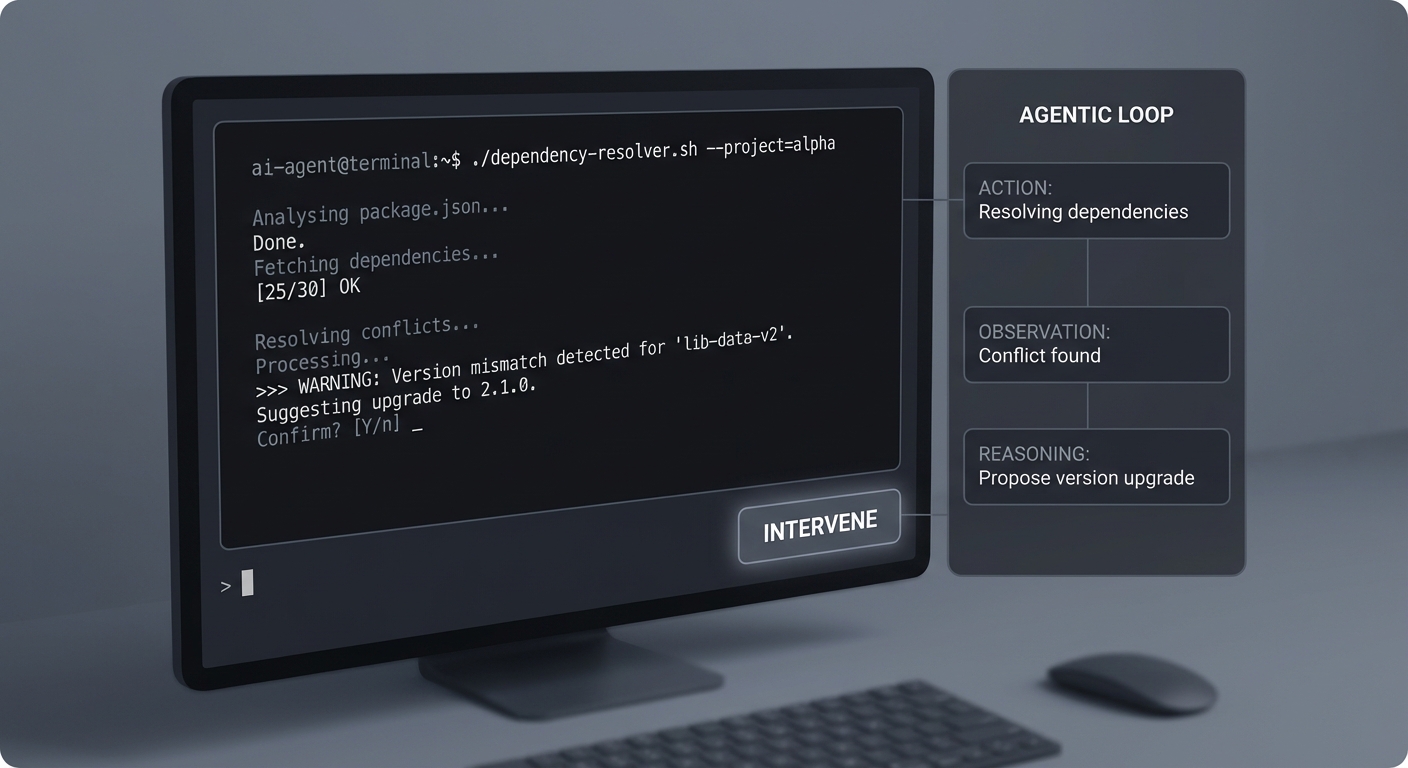
It handles the Action $\rightarrow$ Observation $\rightarrow$ Reasoning loop without me constantly nudging it. I pointed it at a Python project with a broken dependency tree. Instead of just suggesting pip install x, it:
-
Scanned the file system.
-
Identified a version conflict in
pyproject.toml. -
Uninstalled the conflicting package.
-
Pinned the correct version.
-
Ran the test suite to verify.
It successfully maintains state. It remembers that it deleted a file three turns ago. With a 400k token context window, it can hold enough of the file tree in memory to avoid those "I forgot what file we are in" errors.
Steering while it thinks
The most frustrating part of 5.2 (and current Claude models) is watching the agent go down a rabbit hole. You see it misinterpret a log, but you have to wait for it to finish generating five paragraphs of wrong code before you can correct it.
5.3-Codex introduces mid-turn steering.
You can now intervene in real-time. If you see the agent grabbing the wrong file or misinterpreting a variable, you can inject a prompt immediately without halting the entire process or resetting the context.
This drastically reduces the "circular debugging" loop. It feels less like sending an email to a contractor and waiting for a reply, and more like pair programming where you can tap your partner on the shoulder.
Codex 5.3 vs. Claude Opus 4.6
Since they released on the same day, you have to choose one. Here is the heuristic:
Use Claude Opus 4.6 if: You are doing greenfield architecture or dealing with massive ambiguity. Anthropic still wins on deep reasoning and "thinking." If I need to design a system from scratch, I’m prompting Claude.
Use GPT-5.3-Codex if: You want to get things done. OpenAI has optimized for execution. If you need to refactor a class, fix a bug, or migrate a database schema—tasks that require navigating an existing environment—Codex is superior.
Codex 5.3 isn't trying to be a philosopher; it's trying to be a senior engineer who knows how to use grep and doesn't break the build.
Right now, access is locked to the Codex app, CLI, and IDE extensions for paid subs. No API yet. If you code for a living, update your extension and try the new steering mode. It’s the first time I’ve trusted an AI to run rm commands.
Join 2,0002,000 readers and get infrequent updates on new projects.


