
Skis on a Bike: The Engineering Behind SkiRack
SkiRack turns an awkwardly shaped load into a mechanical design problem: clearance, balance, modular holders, and a path from drawings to manufacturing.
Skis are an awkward shape for a bicycle. Their length matters as much as their weight. Put them across the frame and they occupy the space around the rider. Run them along the bike and the pedals, steering, and wheels become part of the packing problem.
SkiRack is my attempt to give that load a place of its own. The project combines a rear carrier with modular holders for skis, a snowboard, and poles. The useful engineering question is where those holders go and how the rest of the bike continues to work around them.
Start with the space the bike already needs
A bicycle has several moving envelopes. The rider needs room to pedal. The steering needs to turn. The rear wheel needs clearance from anything attached beside it. A design can look compact in an isolated render while conflicting with one of those movements on the assembled bike.
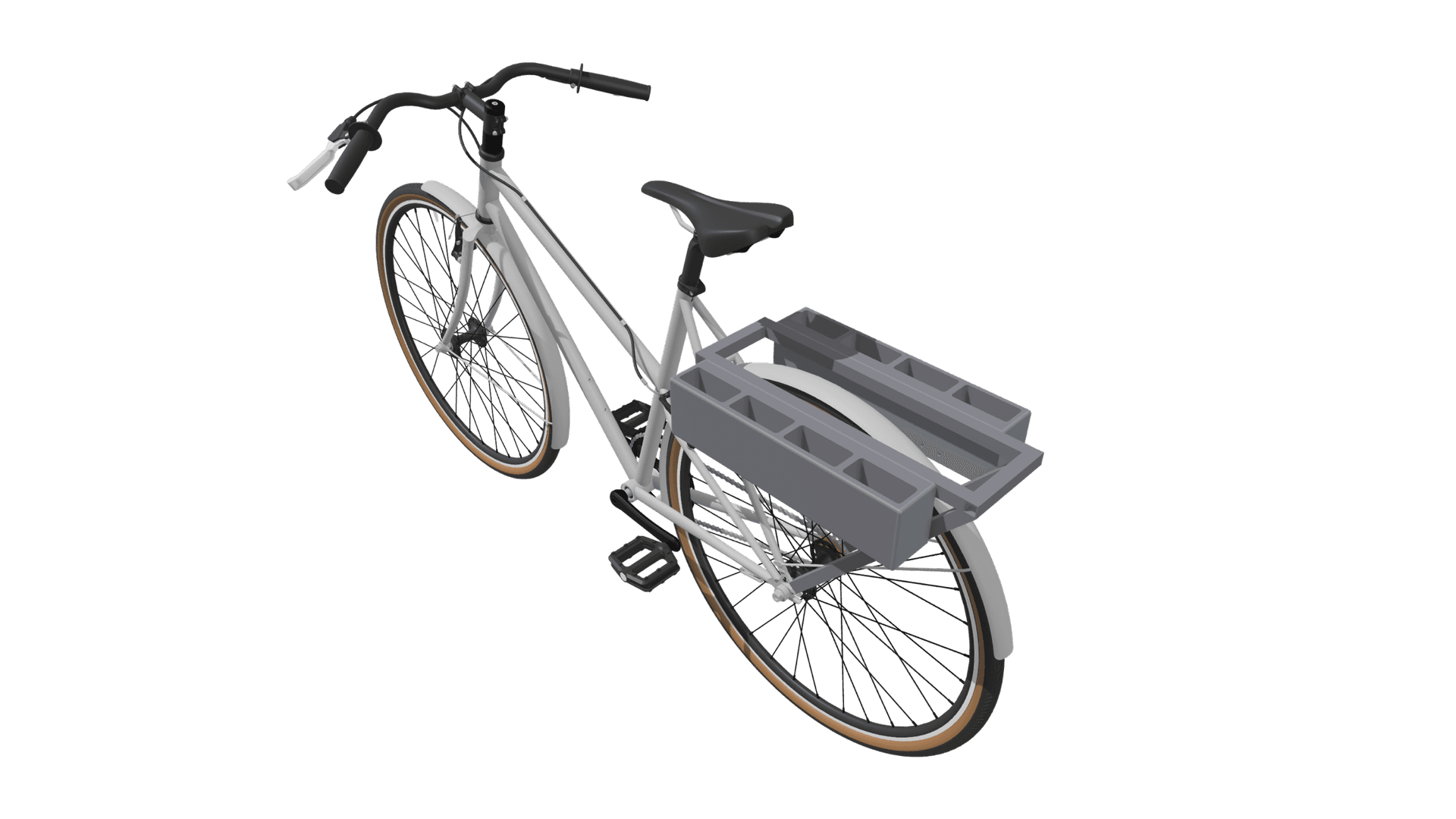
The documented SkiRack layout places the long equipment beside the rear wheel. That changes the problem from finding a convenient strap point to designing a support structure and dedicated receptacles around the load.
The assembly view is useful here because it shows relationships a component render cannot: the rack, wheel, equipment, and rider space belong in the same picture.
Give each holder a clear job
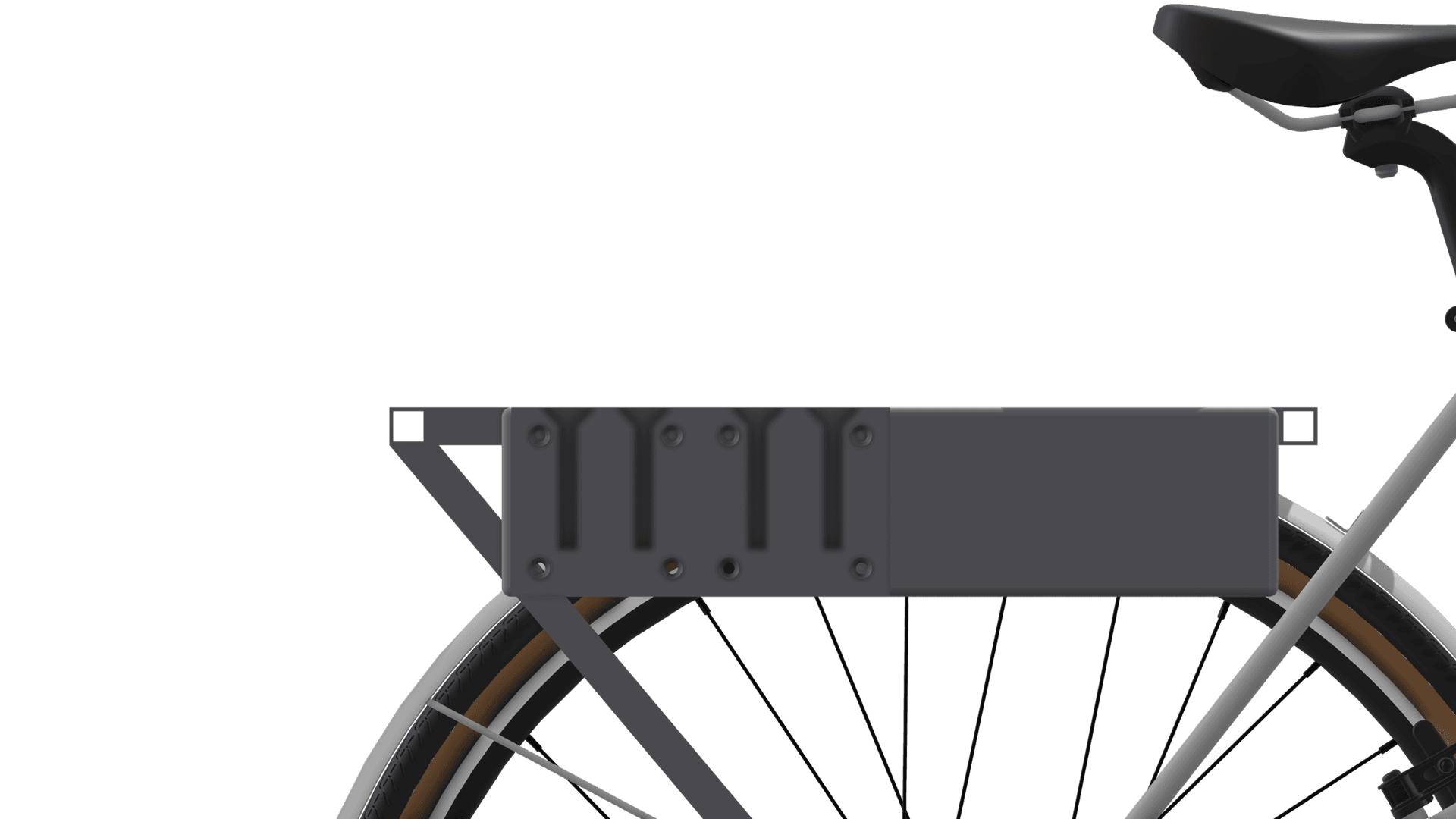
The design uses holders that can be exchanged for different equipment shapes. That keeps the mounting structure separate from the part that receives a ski, board, or pole.
The shaft-like receptacles locate the ends of the equipment rather than asking a general-purpose strap to define the whole arrangement. Dedicated fixing features then address retention. Seating an object and keeping it in place are two different jobs.
For a ski set, the documented dual-side arrangement also considers the load on both sides of the wheel. That is a design intention, not proof that every possible combination of equipment is balanced or compatible with every bike. The assembled configuration still has to be checked.
A model has to become a part
The existing development work goes beyond the assembly geometry. It includes structural load analysis and ABS injection-molding analysis, with fill-time, packing-density, and tooling views.
Those views ask different questions. Structural analysis examines a particular load case. Molding analysis examines how the proposed part and process behave during production. A promising answer in one view does not settle the other.
This is why I keep the manufacturing material alongside the finished-looking render. It shows some of the decisions that sit between a plausible shape and a producible component. It does not establish that a production tool has been commissioned or that the product has completed manufacturing validation.
Keep the load claim attached to its evidence
The development site describes prototype testing up to 20 kg before failure. That is a failure-load statement. It is not a validated 20 kg carrying capacity.
Turning a failure result into a permitted working load would require the underlying test conditions and an engineering assessment. The material used for this article does not establish a rated payload, safety factor, or certified use envelope. A photograph or analysis image cannot fill that gap.
The distinction belongs in the project story because a number can outlive its original caption. Repeating “20 kg” without the failure context would make the claim stronger than the evidence.
Preserve the development trail
The portfolio record includes the drawings and the German utility-model publication. The filing dates to May 2024, with registration recorded on 23 May and publication on 4 July. That is the dated registration history, not a claim about the right's present legal status or a mechanical safety certificate.
The project now has a place for the assembly, individual parts, analysis, and publication record. The next useful step is to keep closing the gaps between those views: a holder that can be made, an assembly that has clearance, and a load claim supported by the exact configuration tested.
The current development presentation is at skirack.x70.one.