
A Garage, a Catalog, and a Watchlist Are Different Things
Carfolio's native screen inventory clarified three distinct jobs: recording owned cars, exploring vehicle information, and keeping track of future interests.
Carfolio is easier to explain when I start with its three main objects.
The garage holds cars someone owns. The catalog helps them explore vehicle information. The watchlist keeps interests they might return to later.
Those all concern cars, but they are not interchangeable records. The September screen inventory made the distinction especially useful: garage detail, catalog detail, and watchlist each needed their own actions and empty states.
An owned car has a history
A garage record belongs to a particular owner. It can carry photos, details, and an owner estimate. Its usefulness comes from retaining that person's information over time.
A catalog entry serves a different purpose. It describes a vehicle someone might be trying to identify or learn about. Finding a catalog match should help populate a proposed record; it should not imply that the user owns that car.
The watchlist is different again. Interest is not ownership, so it should not inflate the garage or its totals. Keeping it separate makes the saved intention clear without inventing a transaction.
Recognition proposes; the owner confirms
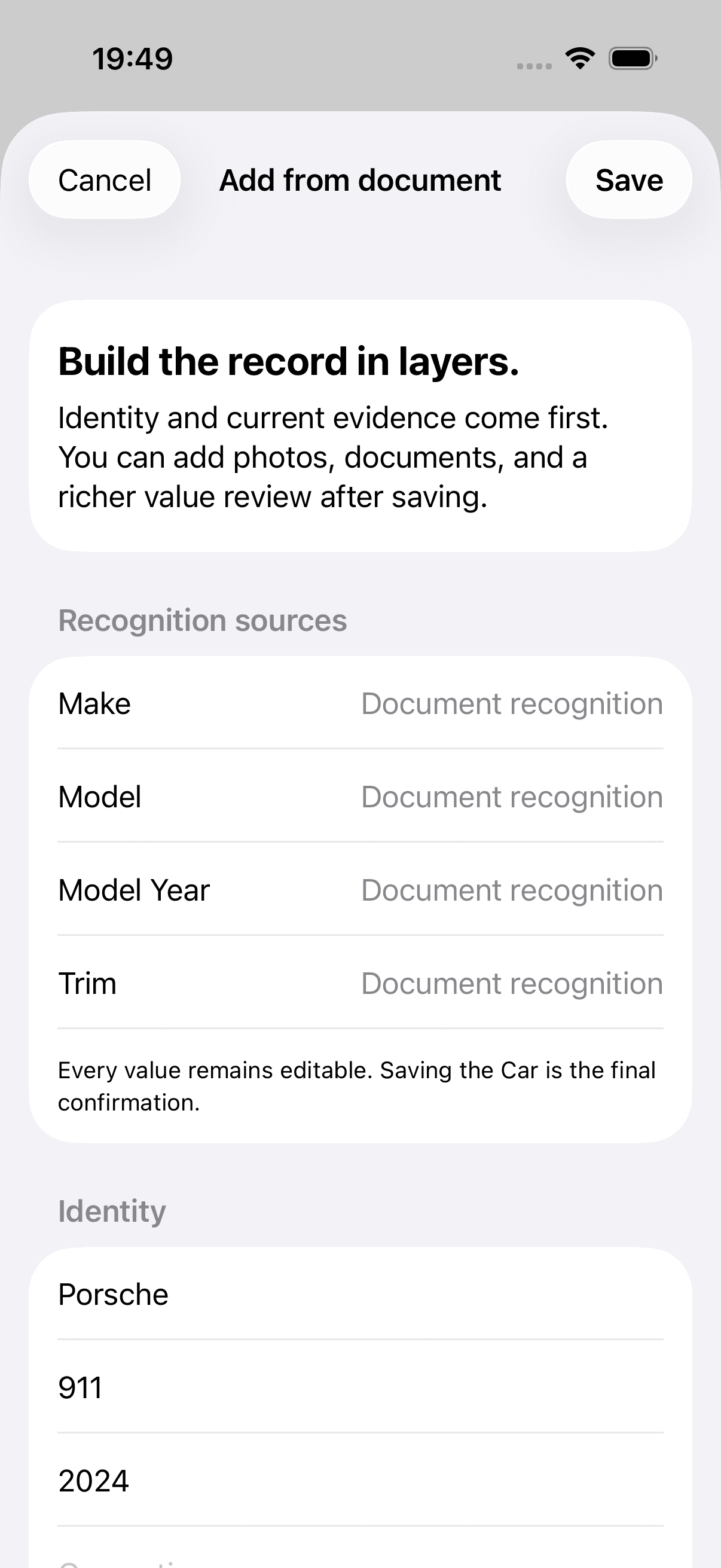
Carfolio's documented add-car routes include manual entry, VIN capture, and document capture. The recognition journey has a proposal screen, a review before saving, and a fallback.
That sequence is more important than a dramatic scan animation. A document can contain ambiguous information. A successful extraction still needs the user to check whether it describes the car they intend to add.
Manual entry should remain a useful route when recognition cannot finish the job. The garage is the product; recognition is one way to reach it.
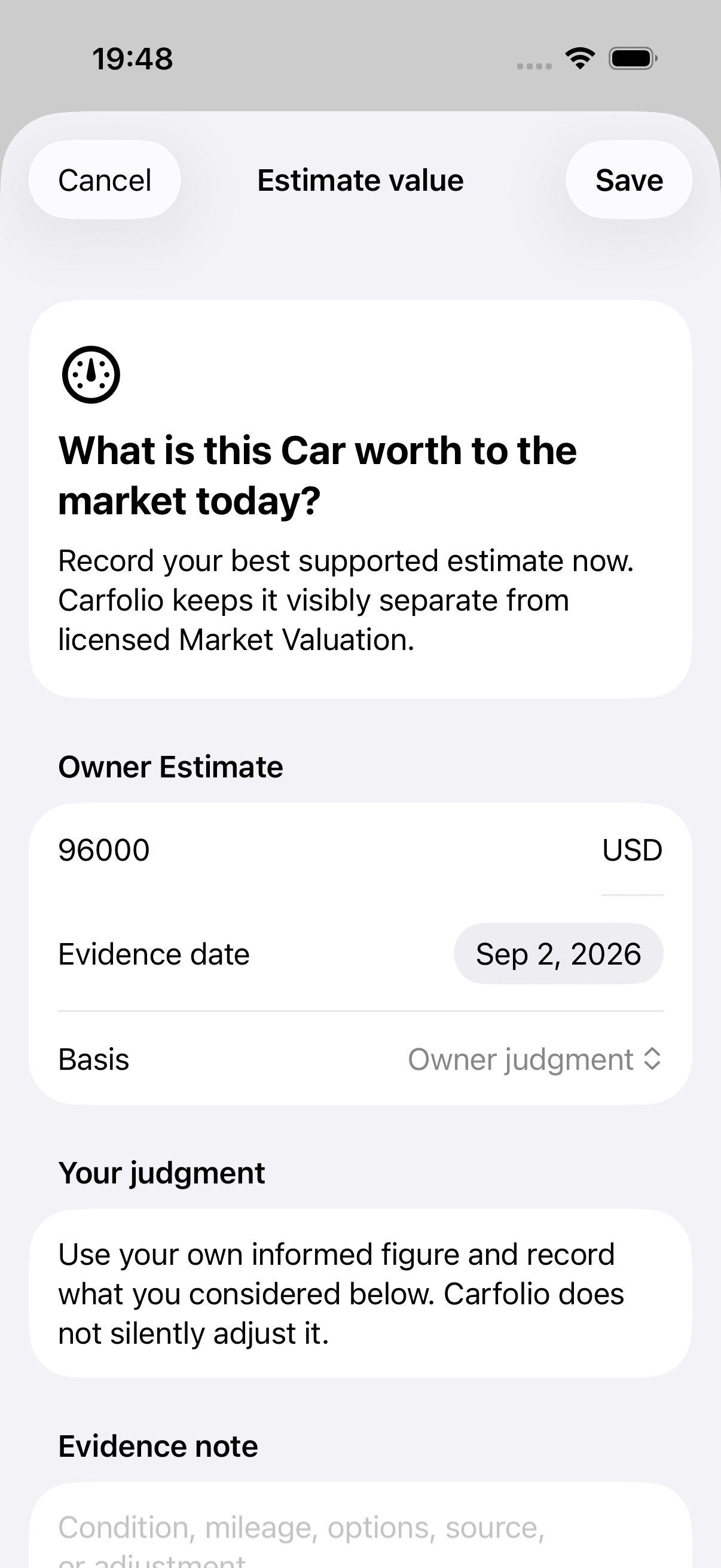
The following native captures show the owner-estimate editor and the recognized-car review with deterministic example data, as captured on 2 September:
An owner estimate should keep its name
The estimate editor is an especially useful reminder to be precise with copy.
An owner's estimate can help them keep track of their own judgment about a car. It is not an observed sale price, and the screen does not prove a live market valuation service. Calling all three “value” would make the product sound simpler while making the information harder to trust.
The interface should preserve the meaning of the number, not just make it prominent. That lets a user compare their own records without attributing authority the app does not have.
Good domain names simplify navigation
Once the objects have distinct jobs, the navigation needs fewer explanations.
Add to the garage when ownership matters. Browse the catalog when identification matters. Save to the watchlist when future interest matters. Review recognition before it creates an owned record.
This is why I like the Carfolio problem. It looks like a collection of screens, but its clarity depends on the underlying nouns. If those are right, even the empty screens can tell the user exactly what belongs there.